
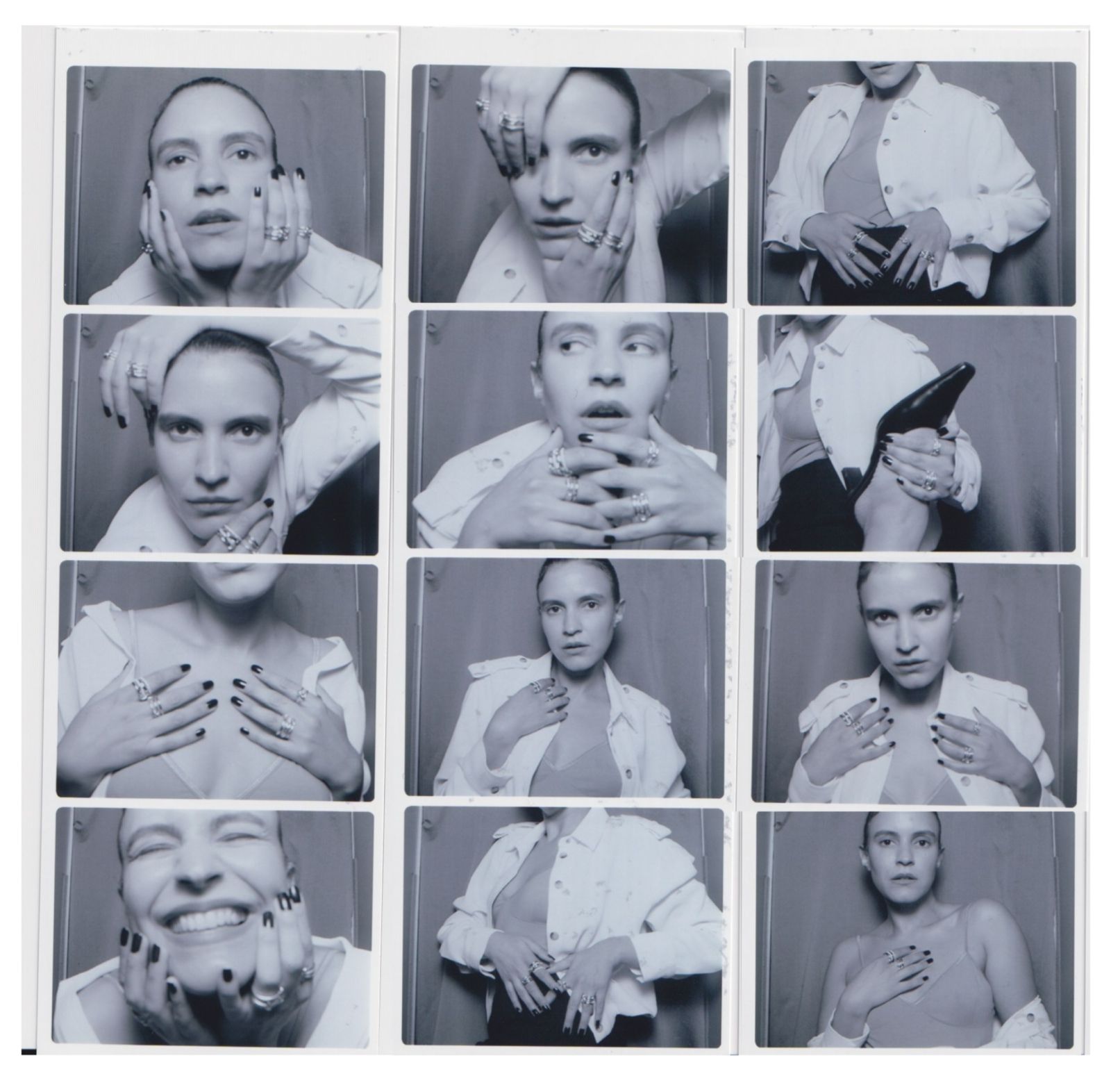
Inside the Cinematic and Musical Universe of Dana Boulos
- Sheri Roushdy
- Features
There is a certain kind of image that lingers, not because of what it shows but because of what it withholds. The work of Dana Boulos lives precisely in that space, suspended between clarity and ambiguity, where emotion takes precedence over explanation. Moving fluidly between photography, film, music, and fashion, Boulos has built a visual language that feels at once instinctive and meticulously composed. Her images do not simply document, they immerse, drawing the viewer into atmospheres shaped as much by rhythm and feeling as by light and form.
Before stepping into directing, Boulos developed her eye through photography, learning to observe with precision and restraint. That foundation still anchors her work today, even as her practice expands into motion, sound, and narrative. As her answers reveal, her approach is less about telling linear stories and more about constructing emotional worlds, ones informed by her cross cultural upbringing, her connection to youth and music scenes, and an ongoing interest in identity as something fluid and evolving. In this conversation, she reflects on the shift from still to moving image, the balance between control and spontaneity, and the quiet, intuitive process behind creating work that feels both cinematic and deeply personal.
You started in photography before moving into directing. What did filmmaking allow you to express that still images could not?
Photography taught me how to observe, but filmmaking let me step inside the moment. With film, I can build time, tension, and emotion in ways a single frame can’t capture. It’s not just about what something looks like; it’s about how it unfolds, how it breathes, how it makes you feel over time.
Directing has become a central part of your work in recent years. What draws you most to directing, and how does your background in photography shape the way you build a scene from behind the camera?
Directing feels like the most complete form of expression for me. It brings together image, movement, sound, and performance. My background in photography is still at the core of everything; I think in frames first. Every scene starts visually, with composition and light, and then I expand outward into motion and emotion.
Your work moves between film, photography, music, and fashion imagery. Do you see all of these as part of the same language, or does each medium allow you to tell a different kind of story?
To me, it’s all the same language. Film, photography, music, fashion; they’re just different ways of expressing mood and identity. But each medium has its own rhythm. Photography is immediate and precise, film is immersive, music is emotional. I move between them depending on what the idea needs.
Your visuals often feel atmospheric and dreamlike rather than purely narrative. When you begin a project, do you start with a story, or with a feeling you want the viewer to experience?
I always start with a feeling. Before there’s a story, there’s a tone; something atmospheric, almost intangible. The narrative builds from that. I’m less interested in explaining everything and more interested in creating a world you can step into.
You have directed campaigns as well as short films and visual projects. Do you approach branded work differently, or do you try to bring the same cinematic language into everything you shoot?
I approach everything with the same cinematic mindset. Even in branded work, I’m always thinking about how to elevate it into something that feels like a film rather than an ad. It’s about creating a point of view and making it feel real and intentional.
You have worked with both major fashion houses and independent creative projects. How do you balance commercial work with maintaining a personal visual identity?
It’s about being very clear on my taste. No matter the scale or client, I hold onto a consistent visual language: how I use light, how I frame people, and the pacing. That’s what keeps everything cohesive. The commercial side just becomes another platform to push that further.
You grew up between different cultural influences, being Lebanese and Sudanese and later based in Los Angeles. How has that mix of backgrounds shaped the way you see images and storytelling?
Growing up between cultures gave me a sensitivity to nuance and contrast. There’s a duality in how I see things, softness and strength, intimacy and distance. It shaped my instinct to look for emotion beneath the surface rather than just what’s obvious.
You started using a camera at a very young age. When you look back now, do you feel that instinct to document everything was already a form of storytelling?
Definitely. I think I was always documenting as a way of understanding the world around me. Looking back, it was already storytelling; I just didn’t have the language for it yet.
You have spoken about being drawn to youth culture, music, and subcultures in your work. What continues to inspire you about those worlds?
There’s an honesty in those spaces that I’m always drawn to. Youth culture and music feel raw, unfiltered, and constantly evolving. It’s where people are experimenting with identity, and that tension is really inspiring visually and emotionally.
You have also worked as a DJ and in music environments. Does sound influence the way you think about rhythm, pacing, and mood when you direct?
Sound shapes everything for me. It influences how I pace a scene, how I cut, and how I build energy. Even when I’m shooting, I’m thinking about rhythm; there’s always a musicality to the way I move the camera and direct a performance.
Your images often feel very instinctive, almost like moments captured rather than constructed. How much of your process is planned, and how much comes from reacting to what happens on set?
It’s honestly a lot of balance between planned and spontaneous. I plan a lot in terms of structure, lighting, and intention, but I always leave space for things to happen naturally. The most interesting moments are usually the ones you don’t force. It’s about being ready to catch them.
Having worked in front of the camera earlier in your career, did that experience make you more aware of vulnerability and trust when you direct or photograph someone else?
Yes, completely. Having been in front of the camera, I understand how talent feels, the pressure, the vulnerability, that awareness of being watched. It’s why I’m able to speak to them in a way that actually resonates, not just give direction but guide them into a space where they feel comfortable and understood. I know the best moments come when that wall drops, so I’m very focused on creating an environment where they can just be, rather than perform.
Looking ahead, what kind of projects feel most urgent to you now, the ones that stay in your mind before they even have a form?
The projects that stay with me are the ones that feel slightly undefined, more like an energy than a concept. I’m drawn to stories that explore identity, memory, and transformation, especially in a more psychological or atmospheric way. Those are the ones I keep coming back to.