
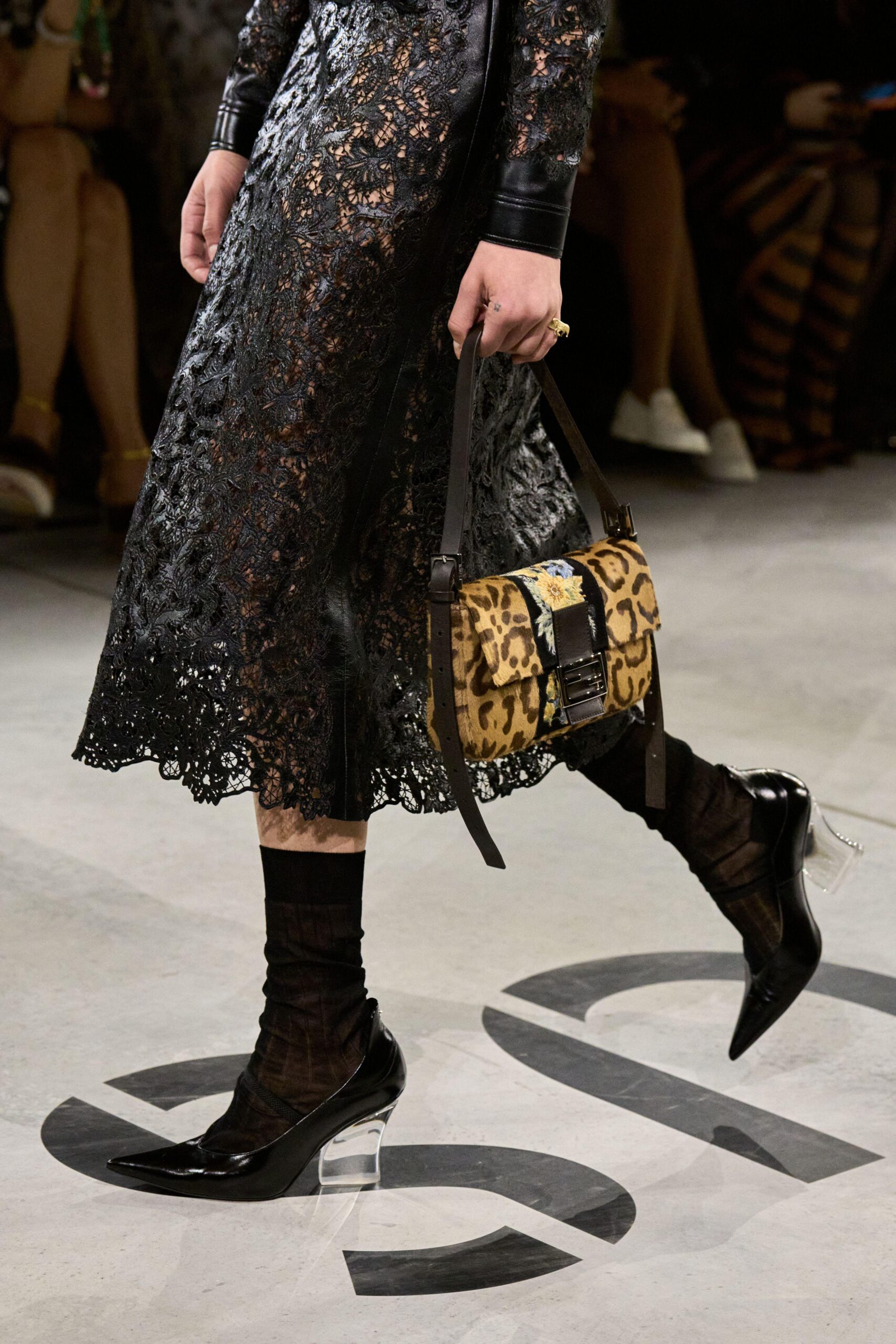
Maria Grazia Chiuri’s Fendi Debut for Fall/Winter 2026
- Sheri Roushdy
- Fashion
Maria Grazia Chiuri’s debut for Fendi, presented in Milan for Fall/Winter 2026, opened with the words Less I, more us written across the runway floor, a message that set the tone before the first look appeared. The show took place in a vast, stripped-back space that felt intentionally neutral, allowing the focus to stay on the clothes and the house itself. For Chiuri, the moment carried the feeling of a return rather than a reinvention. She began her career at Fendi working on accessories, and this first collection back at the house approached its history with restraint, building slowly instead of trying to shock.
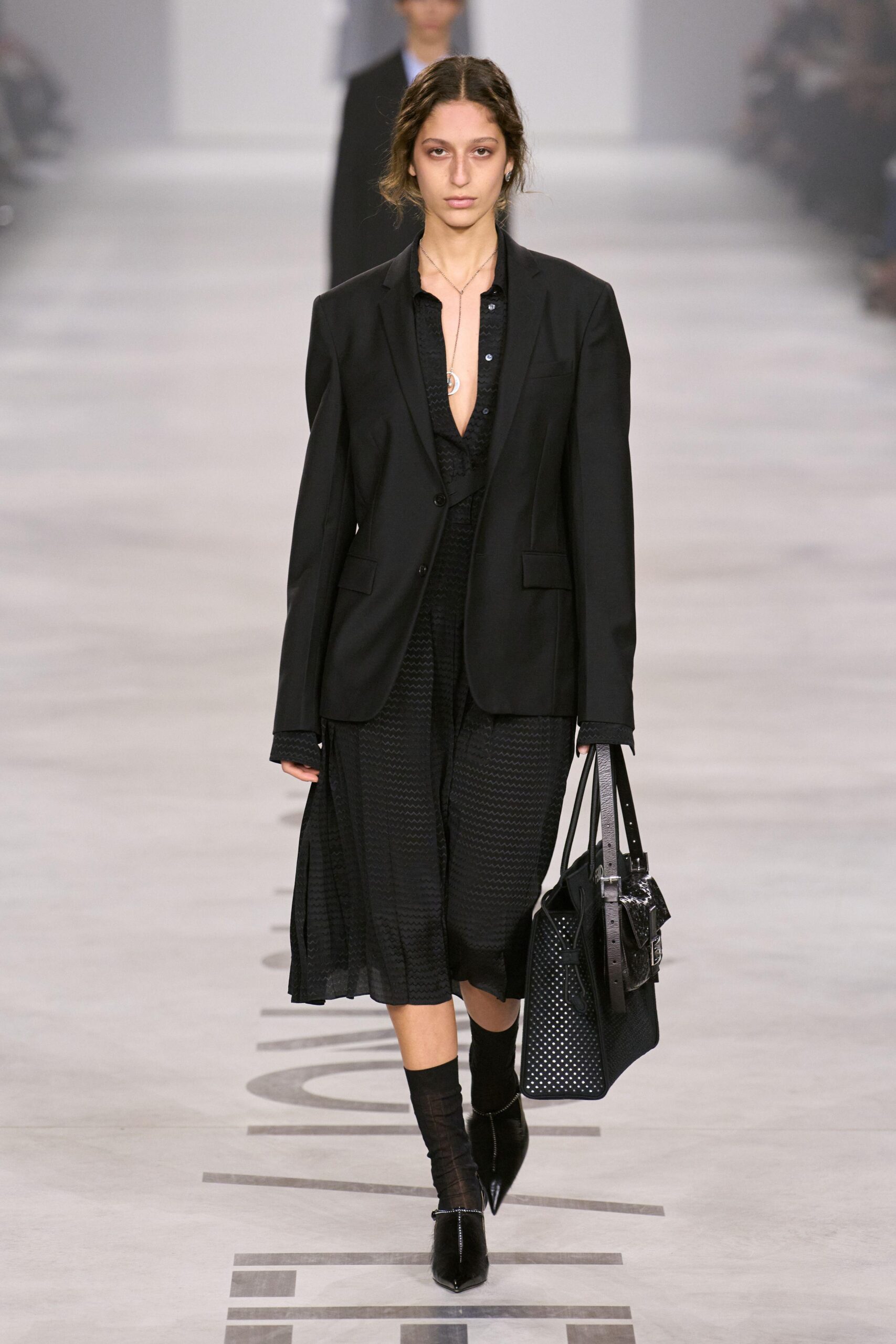
Photo: Gorunway.com
The opening looks established that sense of control immediately. Dark tailoring, long coats, and narrow silhouettes set a steady rhythm, with jackets layered over sheer dresses and structured pieces worn with almost practical simplicity. The line stayed clean and vertical, as if Chiuri wanted to define the shape of this new Fendi before allowing it to become more expressive.
Tailoring remained the backbone of the early lineup. Oversized blazers, fitted skirts, and long coats appeared on both men and women, creating the feeling of a shared wardrobe rather than separate ones. Delicate lace, slips, and sheer fabrics were layered under heavier pieces, balancing softness with structure in a way that felt familiar to Chiuri’s work but grounded in the house’s Roman sense of craft.
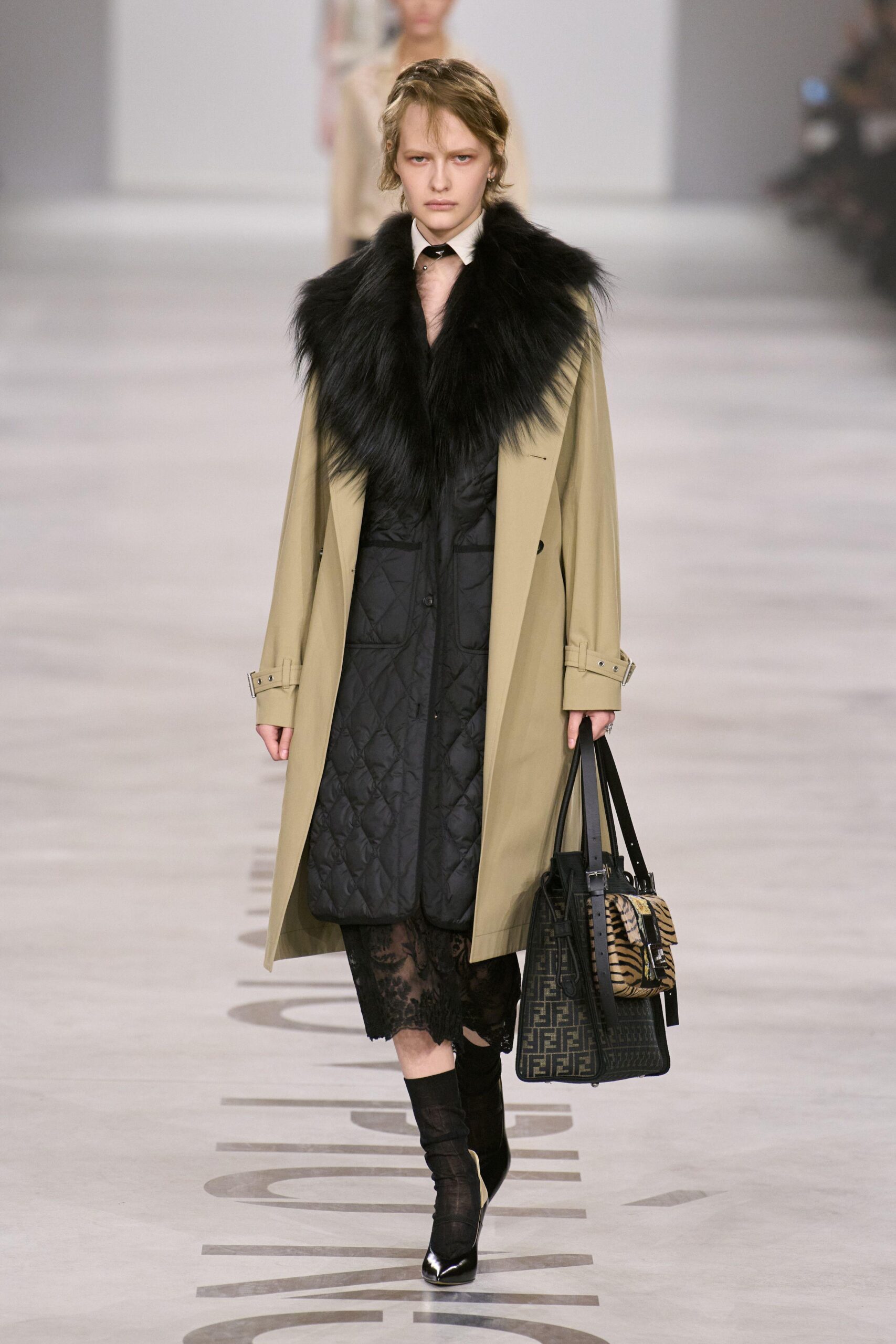
Photo: Gorunway.com
Outerwear quickly became one of the strongest parts of the show. Coats with fur collars, shearling trims, and heavy textures referenced Fendi’s history as a fur house, but the treatment felt careful rather than nostalgic. Some pieces used archival techniques or subtle placements at the sleeve and neckline, allowing the heritage to stay present without dominating the collection.
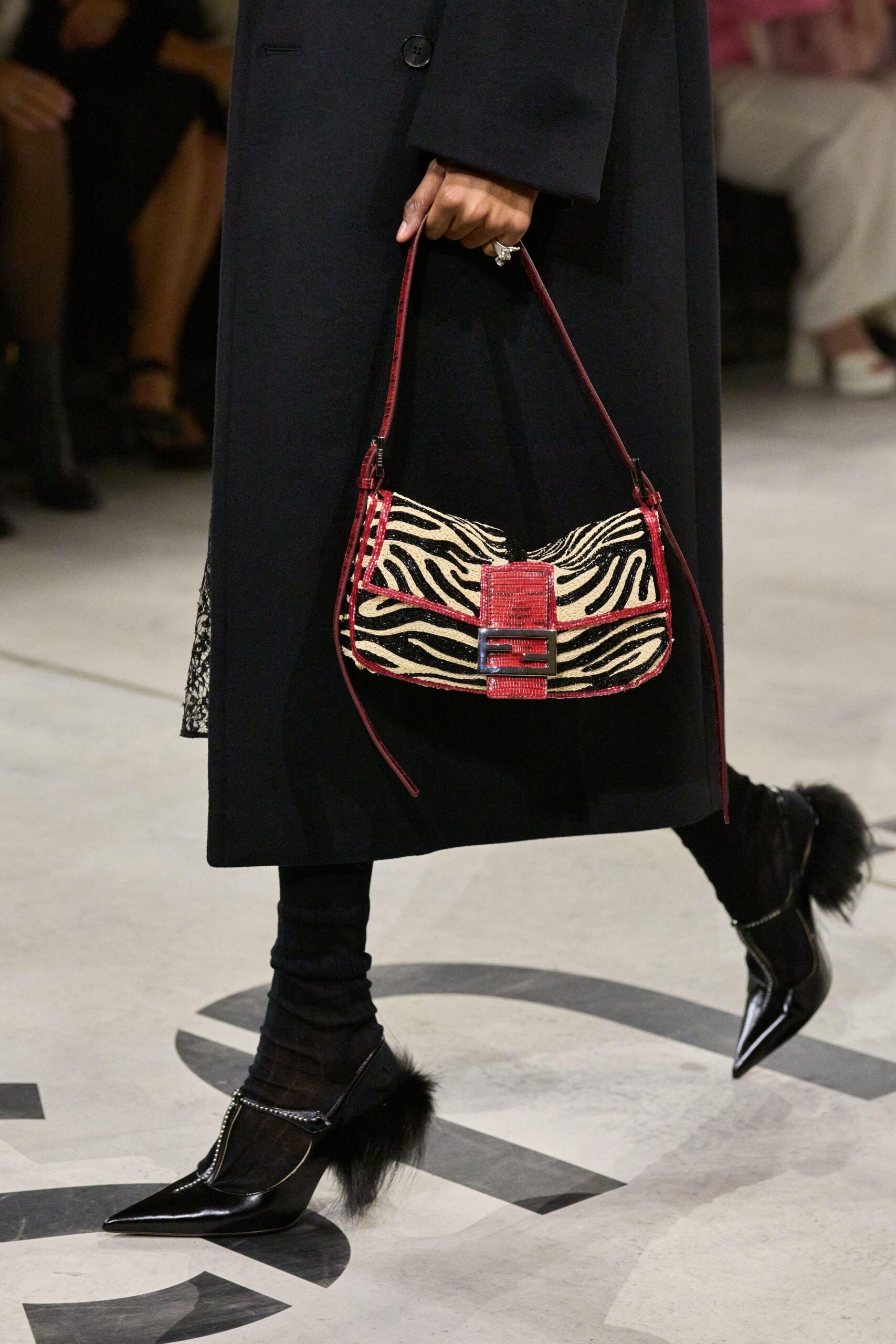
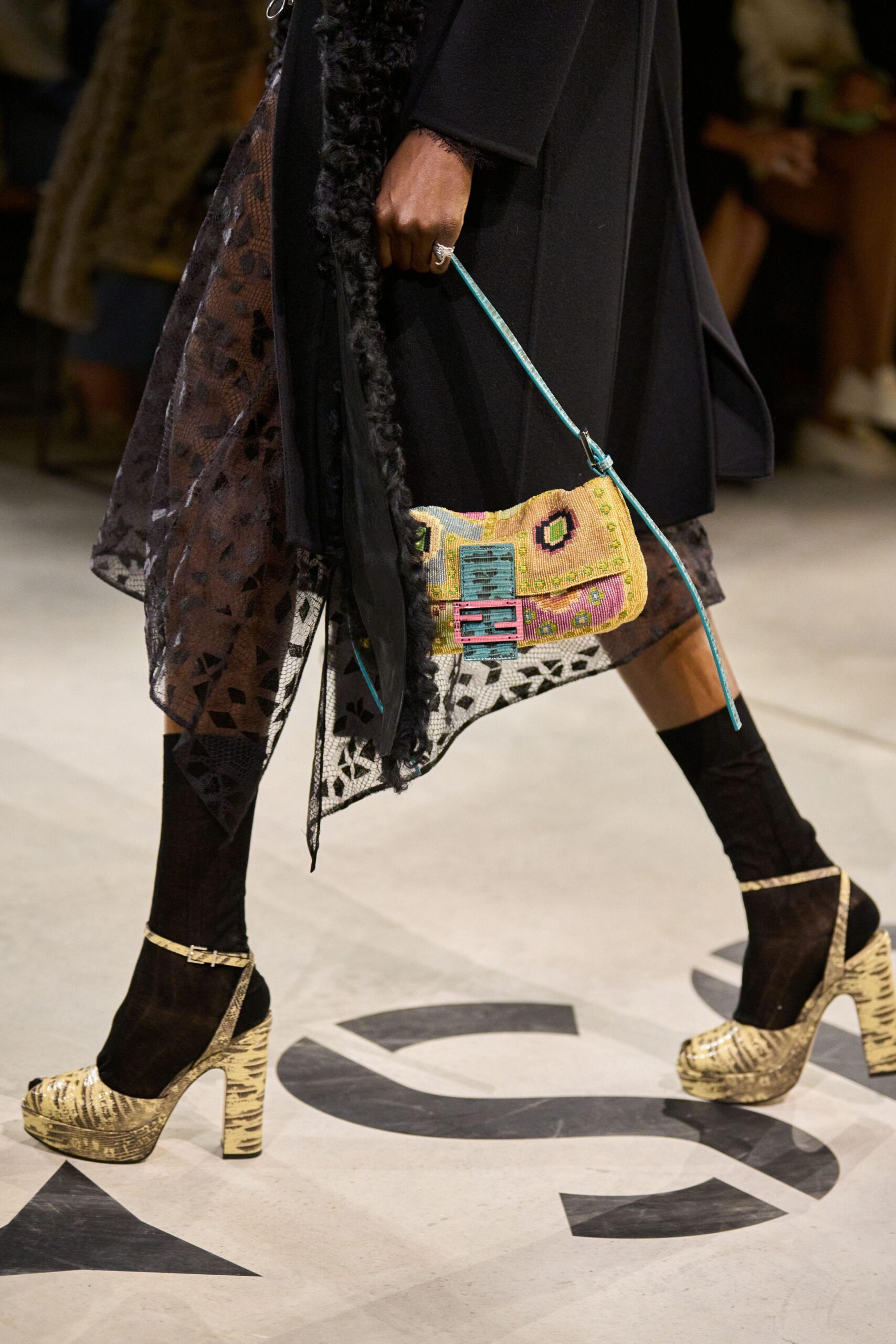
Photo: Gorunway.com
Accessories played a central role, which felt fitting for Chiuri’s return to the house where she first worked on leather goods. The Baguette appeared throughout the show in updated versions, from smooth leather to embroidered and fur-trimmed styles, reinforcing the sense of continuity rather than novelty. The Peekaboo returned in new proportions, shown alongside structured totes and larger carryalls that gave the looks a more practical, everyday feeling. Among the newer pieces, the Lui duffle stood out, a soft leather travel bag with metal FF details and a functional shape that felt deliberately understated. In several looks, models carried more than one bag at once, drawing attention to the house’s leatherwork and reminding the audience that accessories remain at the core of Fendi’s identity.
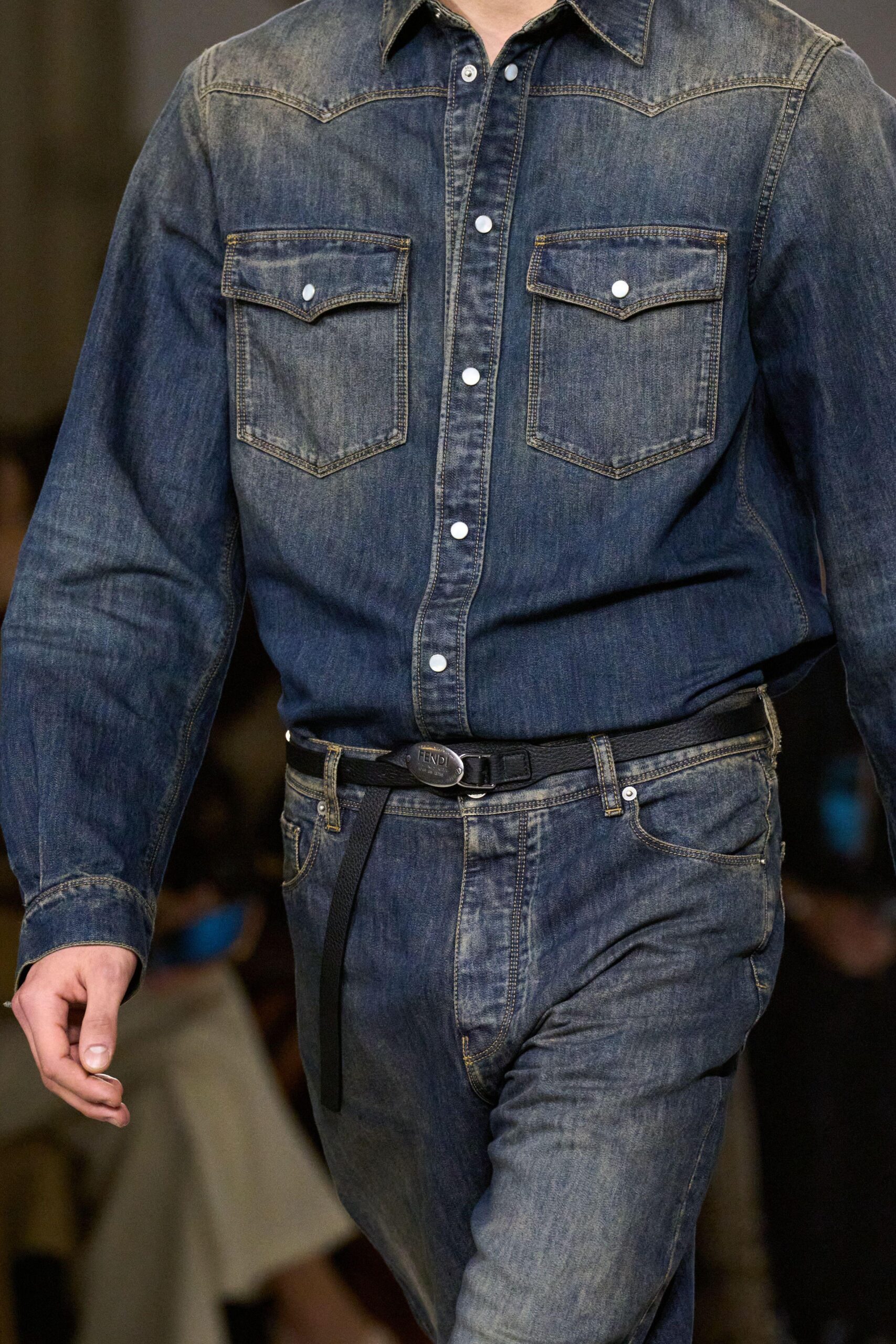
Photo: Gorunway.com
Midway through the show, the decoration became richer without losing the discipline of the beginning. Animal textures, embroidery, and subtle shine appeared alongside the darker tailoring, adding depth without turning the collection theatrical. The mix of materials and techniques echoed the message written on the runway at the start, less I, more us, suggesting a house built by many hands rather than one voice.
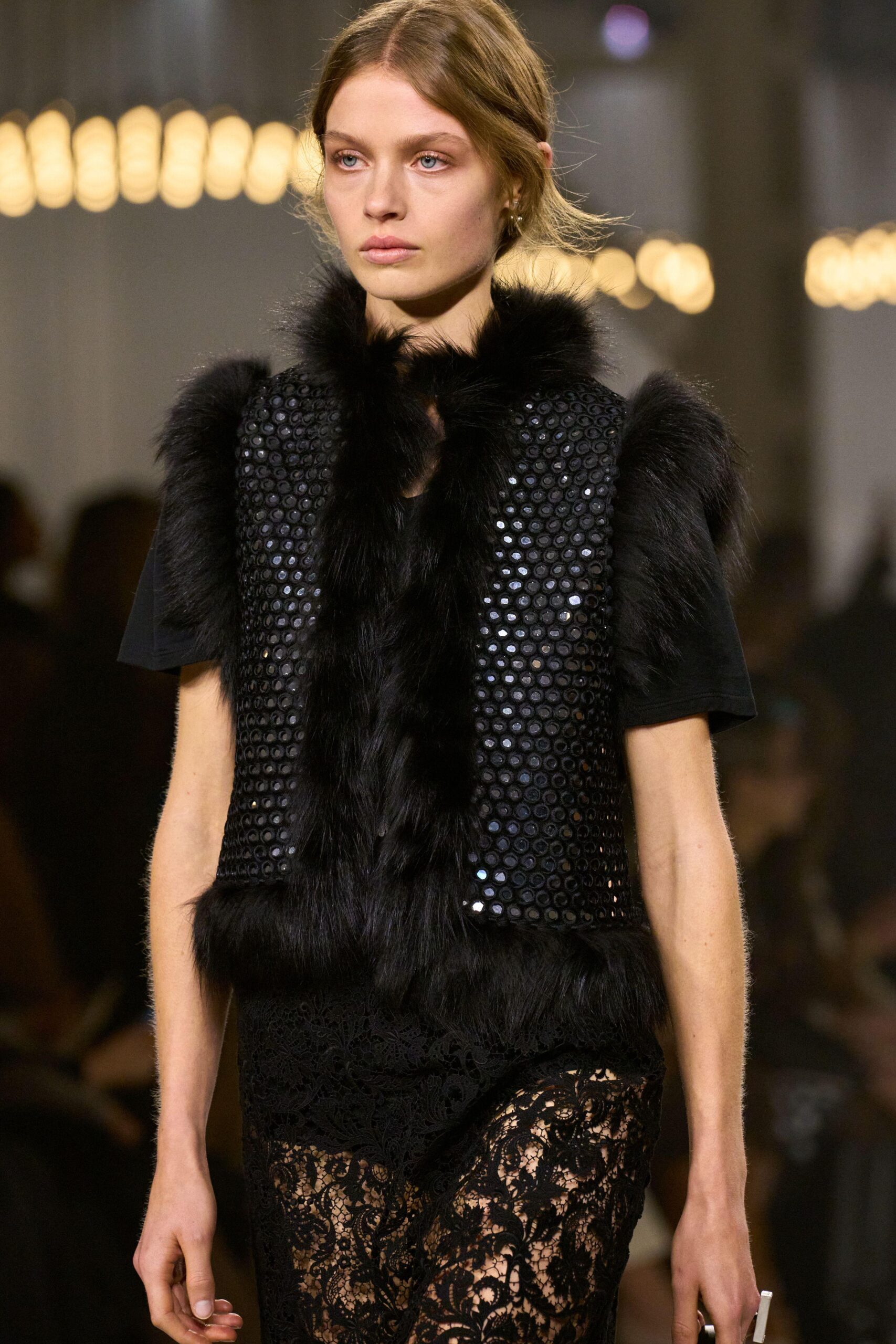
Photo: Gorunway.com
By the end, the collection felt less like a dramatic debut and more like a careful reset. Chiuri did not try to completely change the house. Instead, she focused on tailoring, craft, and leather goods, the elements that have always defined Fendi, and rebuilt the collection from there.
For Fall/Winter 2026, the result was steady rather than spectacular, a show more interested in reminding the audience what Fendi is than in proving what it could become next.