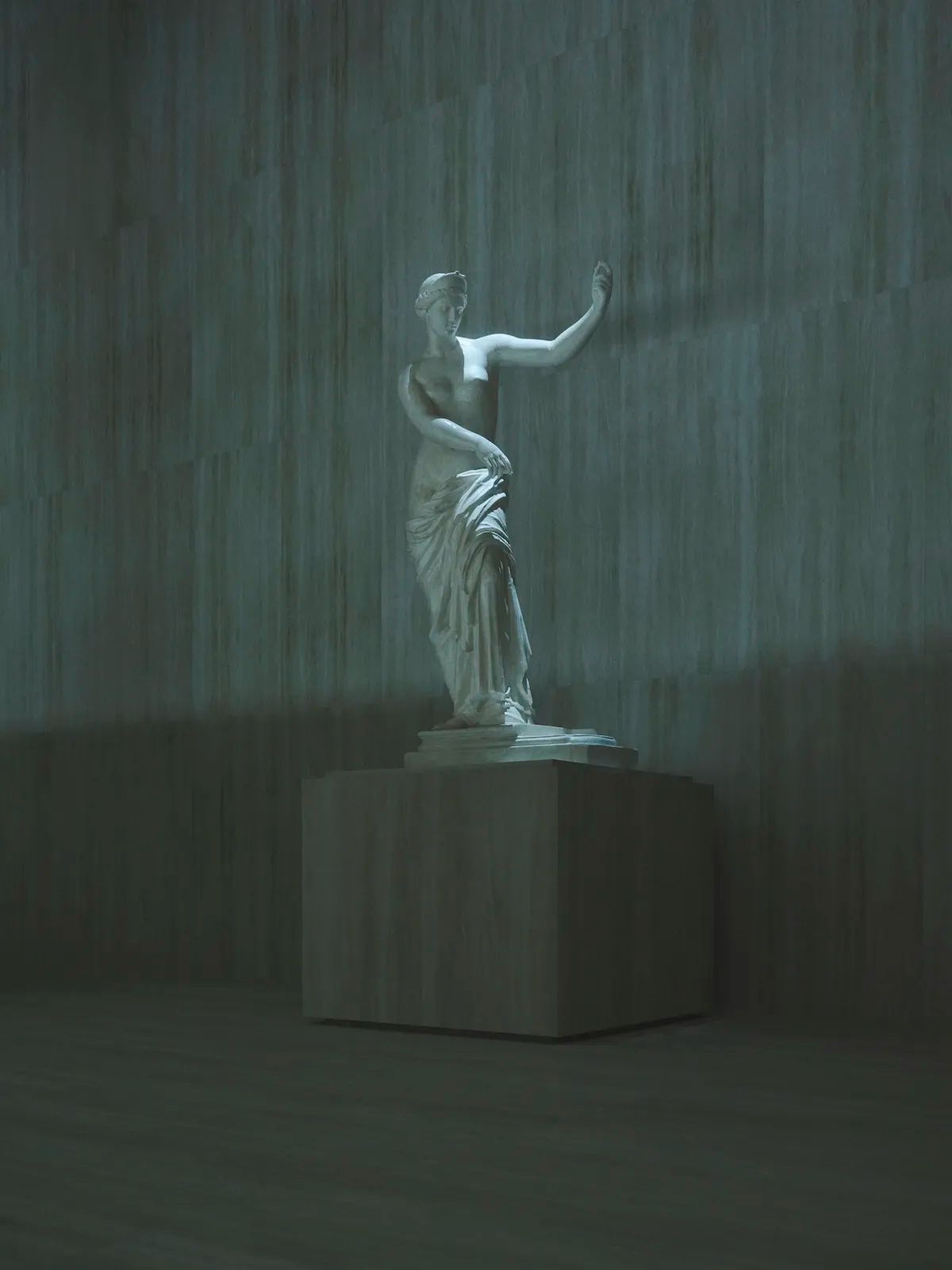
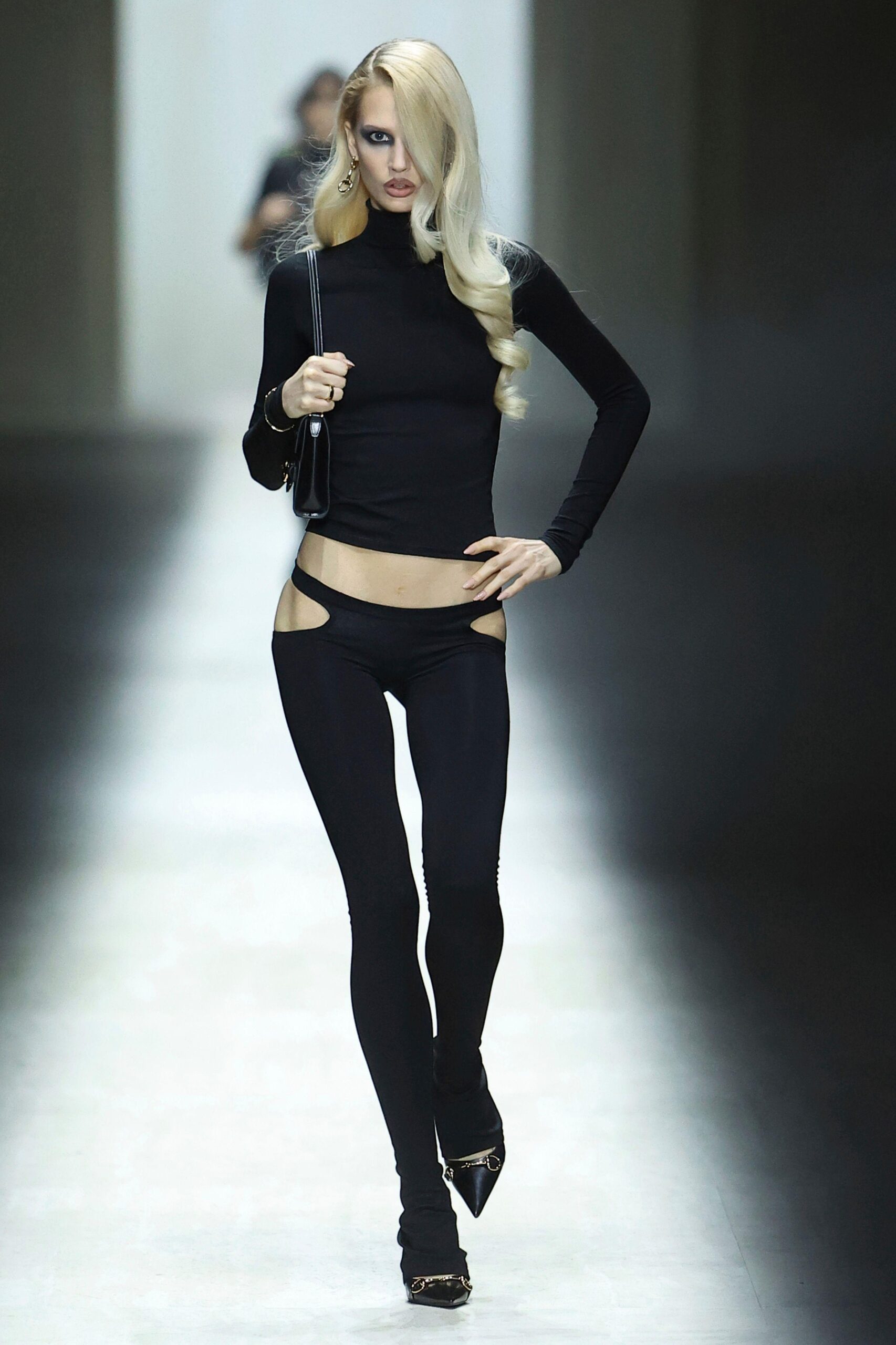
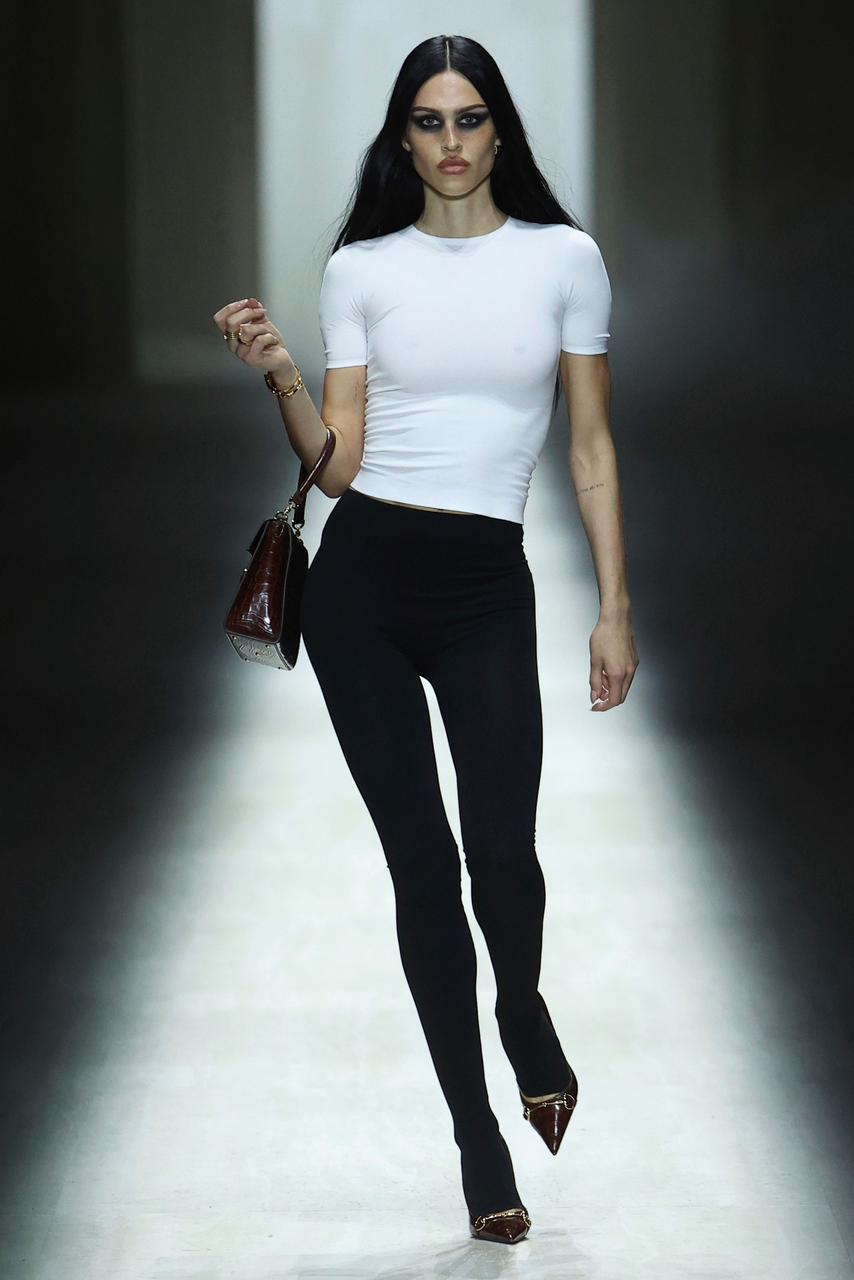
Inside Milan’s Palazzo delle Scintille, Demna staged his debut Gucci runway, titled Gucci Primavera, in a setting that felt closer to a museum than a fashion show, all monumental scale and pale stone surfaces balancing industrial space with classical Italian references. The restraint of the environment set the tone for Fall/Winter 2026, where the silhouette tightened look by look, as if the collection needed to establish control before allowing itself any excess. For his first outing at the house, Demna avoided spectacle, focusing instead on instinct and recognition, building a lineup meant to feel unmistakably Gucci rather than over-explained.
Photo: Courtesy of Gucci
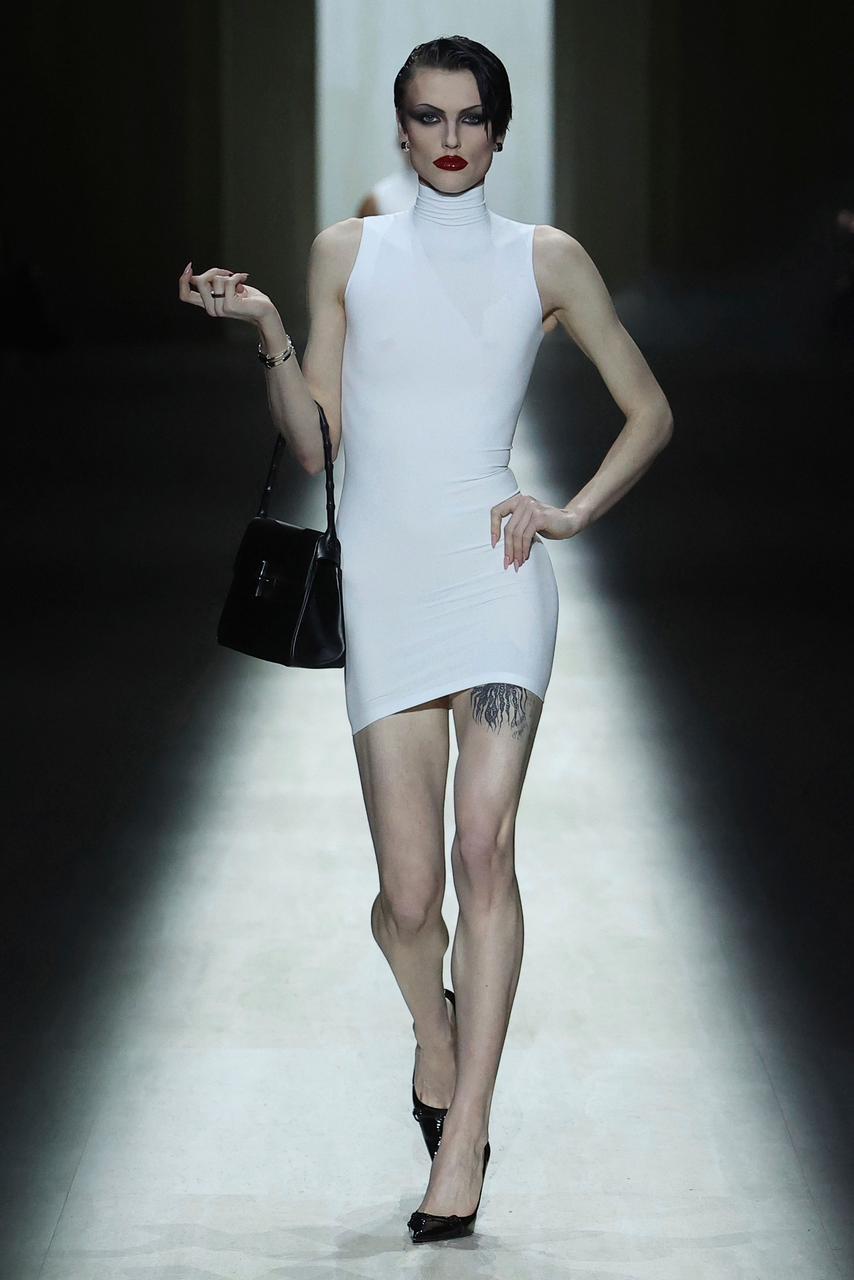
The opening look made that intention clear. A white, body-hugging minidress worn with pointed pumps and a structured leather bag felt stripped down to the essentials, the kind of silhouette that puts all the attention on the figure. The visible leg tattoos only made the effect stronger, reinforcing Demna’s idea of a body-conscious Gucci, something meant to be felt immediately rather than analyzed. From there, the line stayed narrow and vertical, with sharp tailoring, long coats, and skirts cut close to the body establishing a sense of control that ran through the first part of the show.
Tailoring carried the early looks, but it never felt neutral. Jackets were cut firm through the shoulders, trousers fell long and straight, and coats were worn open to keep the line of the body visible underneath. The repetition of that silhouette gave the show a rhythm that felt deliberate, as if the collection was building tension rather than releasing it.
Photo: Courtesy of Gucci
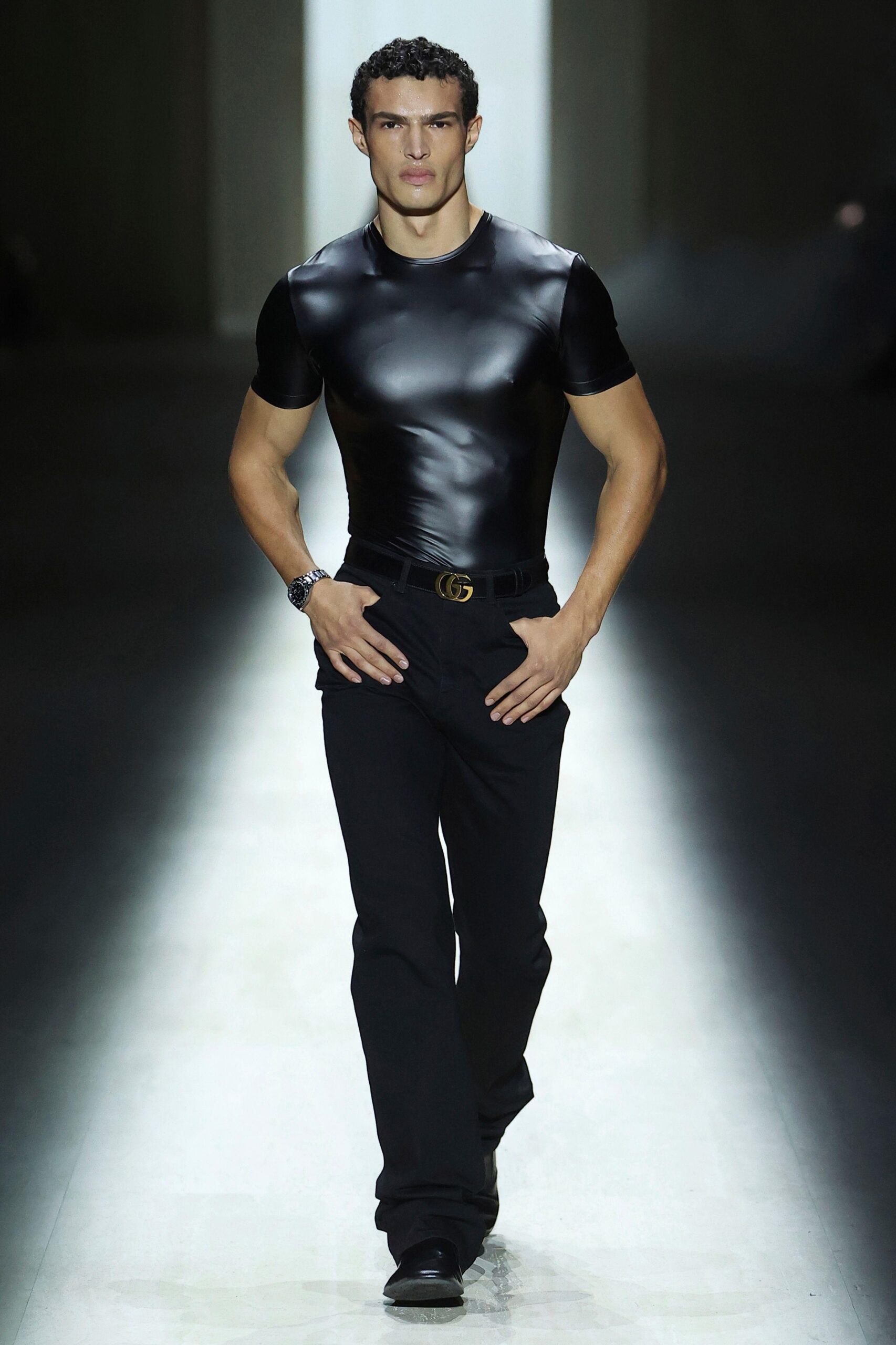
That tension began to shift as the clothes moved closer to the body. Fabrics turned shinier, skirts shorter, and the attitude more direct. References to Gucci’s late-nineties era started to surface through low rises, glossy finishes, logo belts, and narrow dresses that brought the focus back to the figure. The styling followed the same direction, with smoky eyes, sharp contour, and hair that felt closer to after-party glamour than to traditional runway polish.
Photo: Courtesy of Gucci
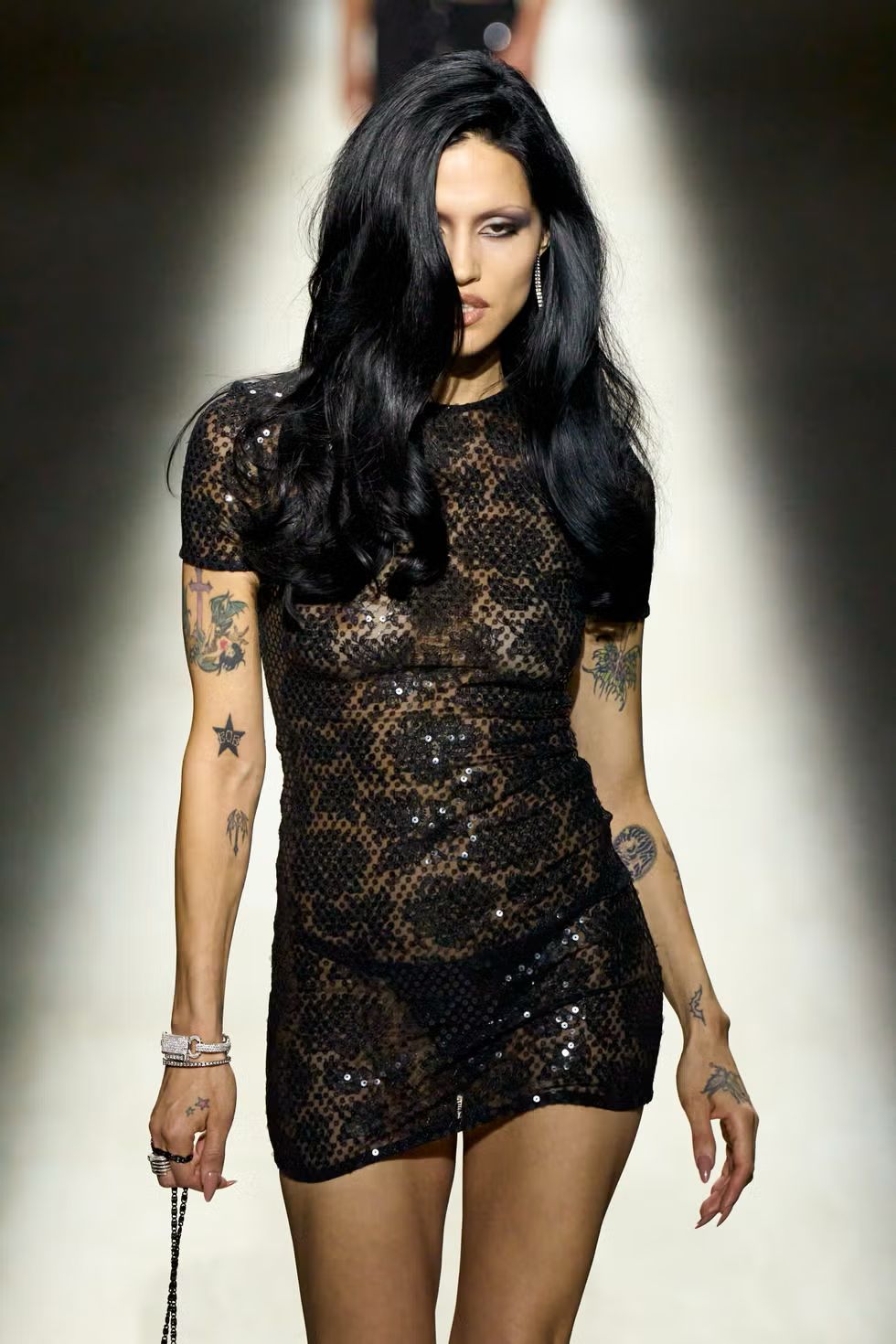
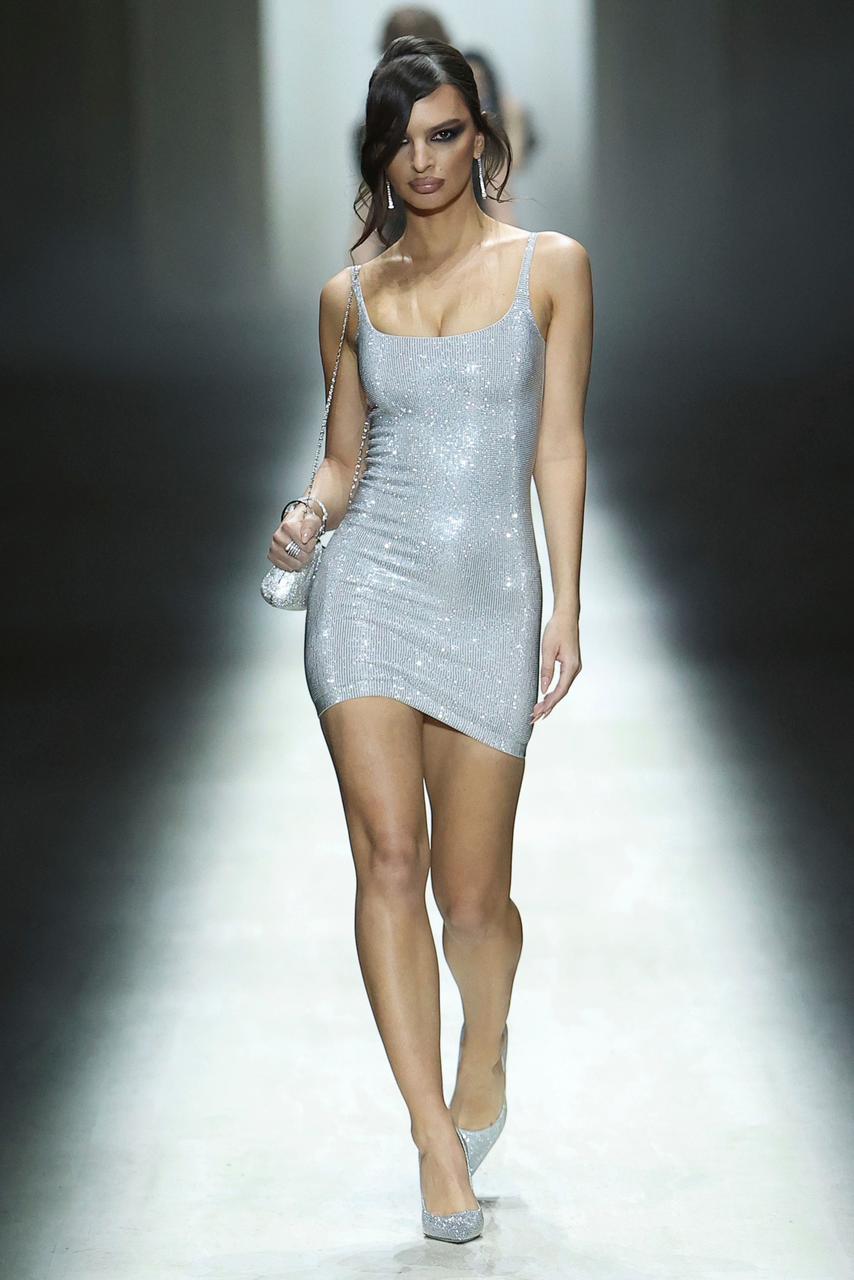
Amelia Gray appeared in a tight, body-conscious look styled with high heels and minimal accessories, pushing the show further into the confident, late-nineties mood Demna kept circling. Gabbriette followed with a darker, more overtly sensual silhouette, her fitted lace look and heavy makeup leaning fully into the after-hours energy that ran through the middle of the lineup. Emily Ratajkowski came shortly after in a sparkling, body-skimming dress she later described as a “super sexy party girl,” a moment that made the nightlife reference impossible to miss.
Photo: Courtesy of Gucci
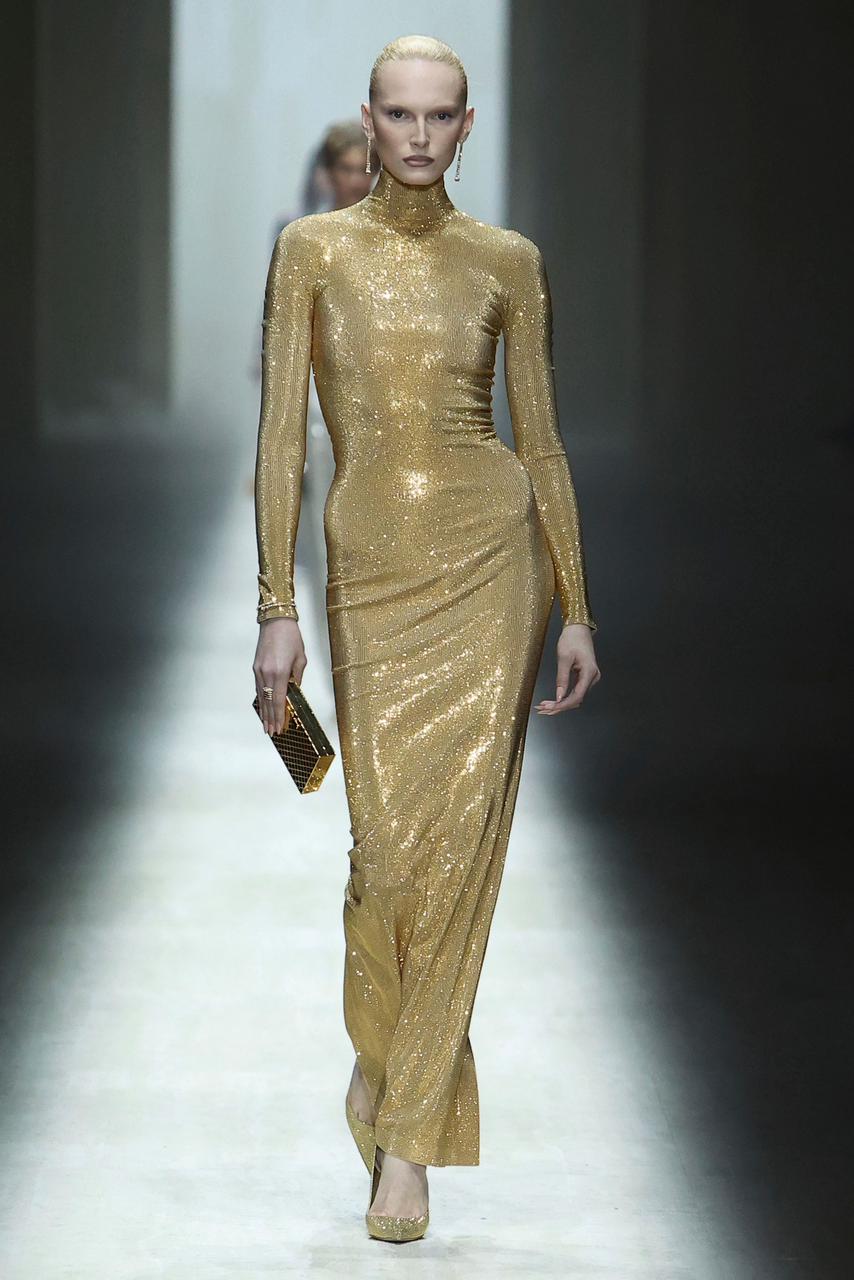
The gold dress worn later by Alex Consani became one of the clearest statements of that mood. Cut close to the body and catching the light with every step, it felt unapologetically glamorous, the kind of look that could have come straight from Gucci’s most confident years. Surrounded by sharper tailoring and darker coats, it did not break the collection’s line, it sharpened it.
Photo: Courtesy of Gucci
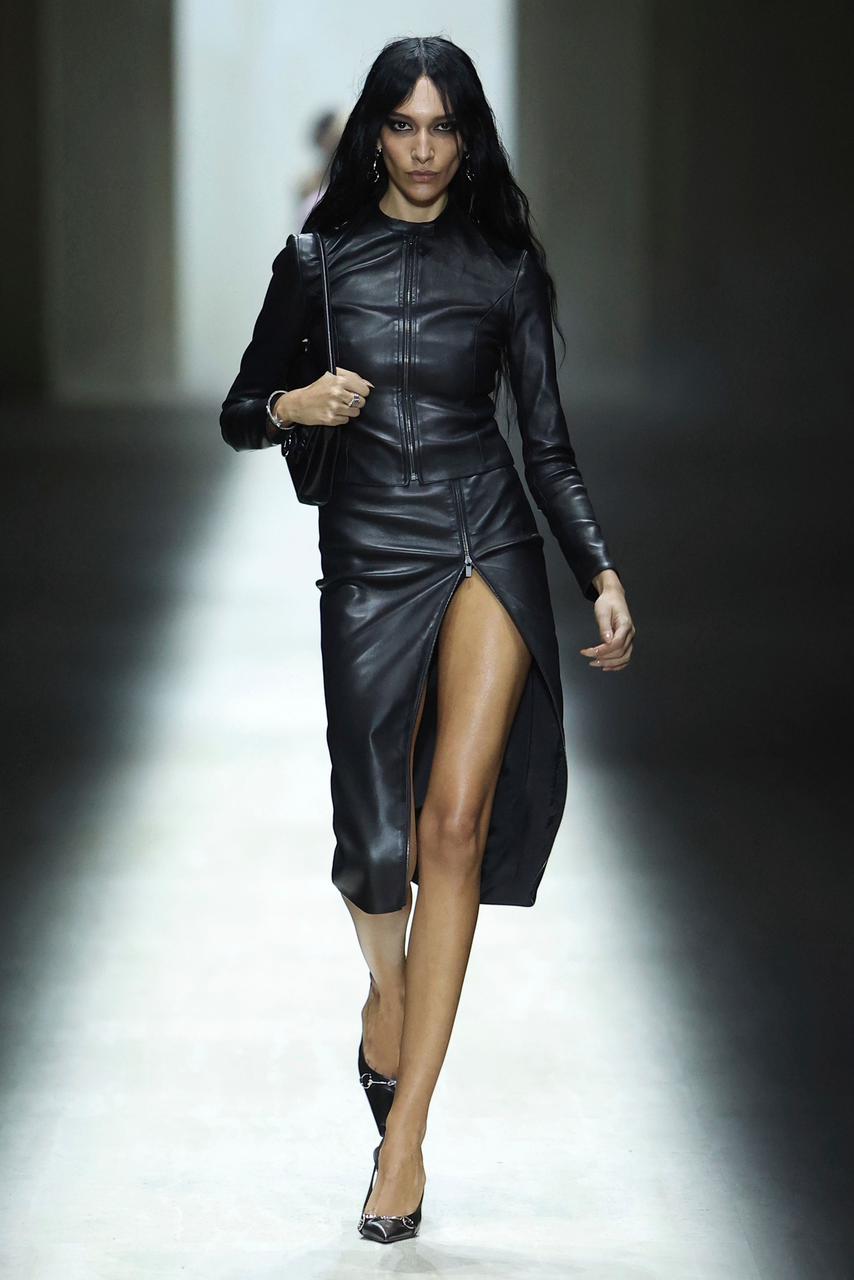
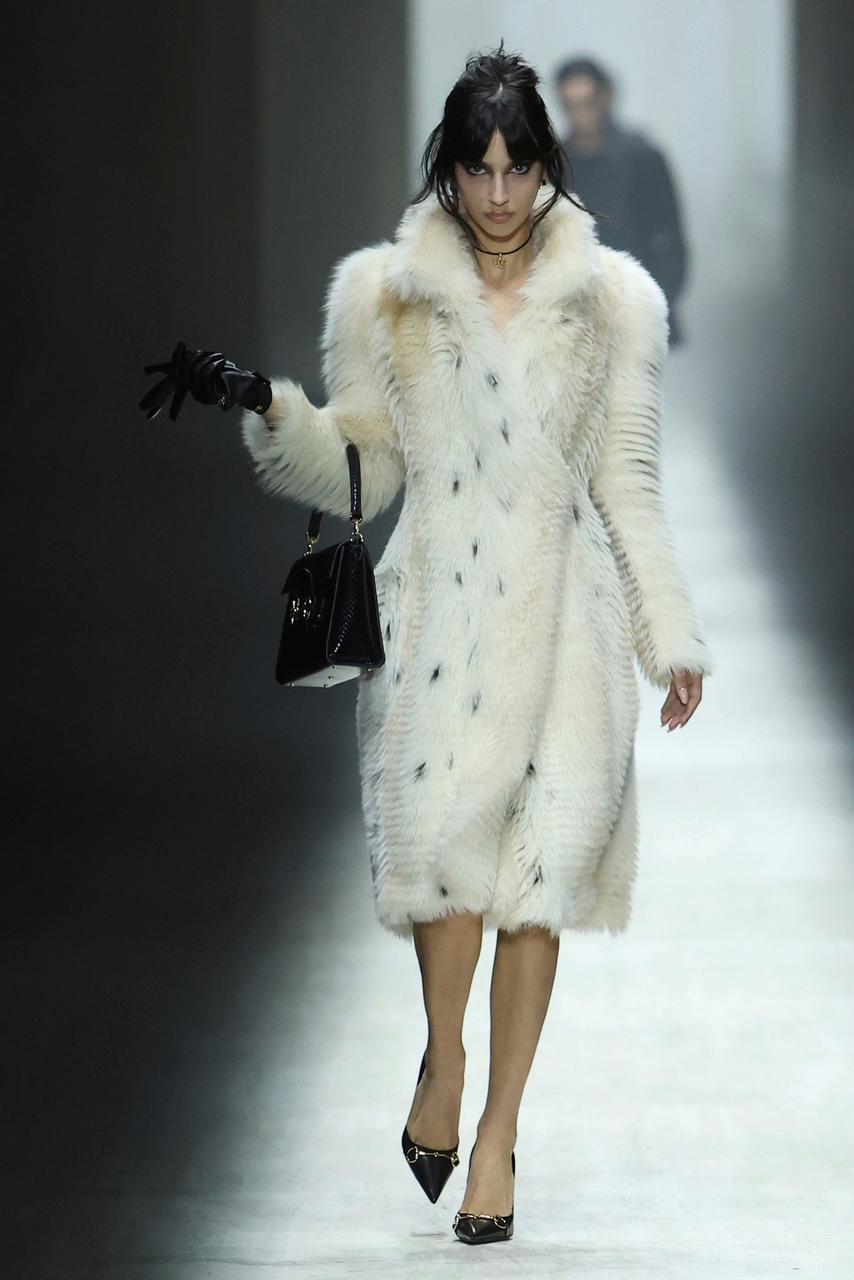
If the dresses pushed the show toward glamour, the outerwear kept pulling it back into control. Long wool coats, leather trenches, and sharply cut jackets appeared throughout the lineup, often worn open over bare legs or fitted silhouettes, maintaining the tension between coverage and exposure. The repetition of those strong, vertical shapes gave the collection its structure, making even the more provocative looks feel intentional rather than excessive.
Photo: Courtesy of Gucci
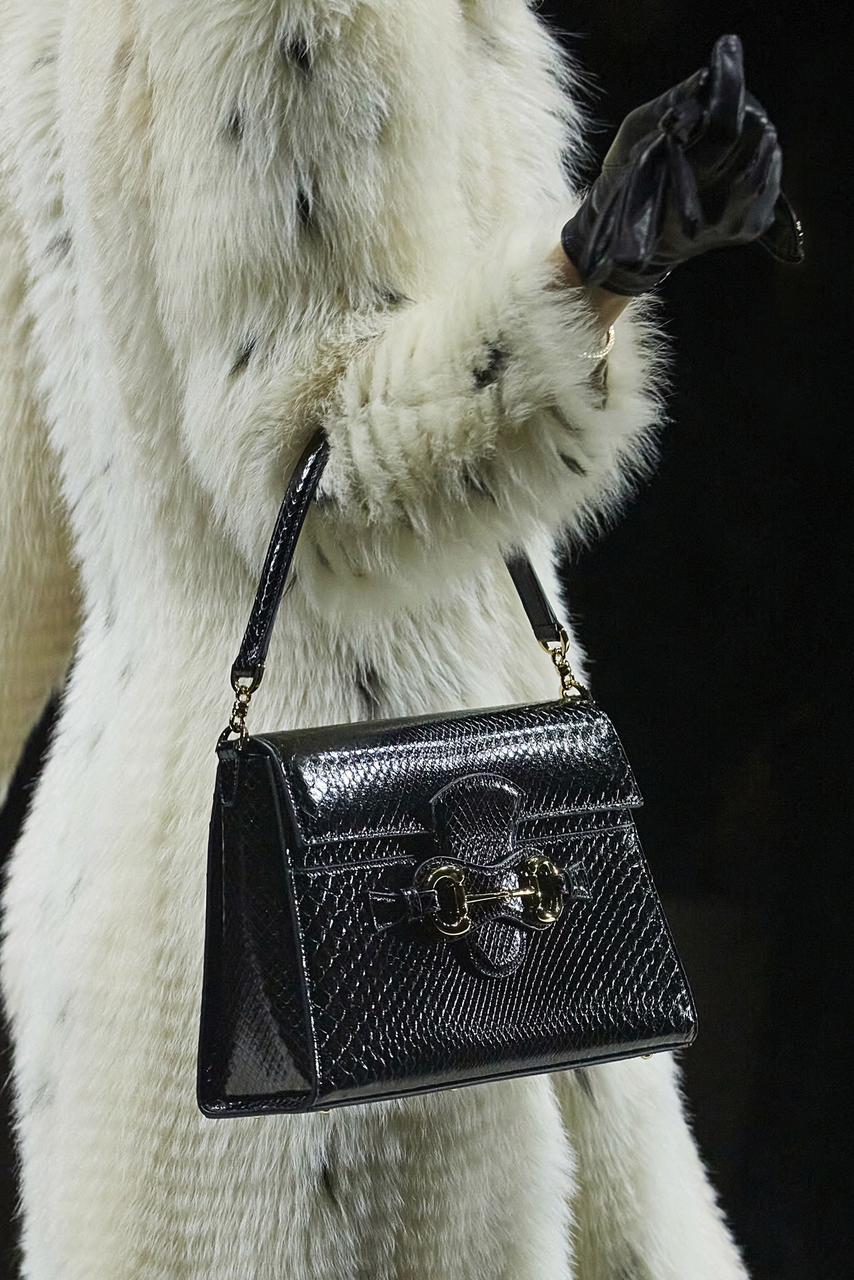
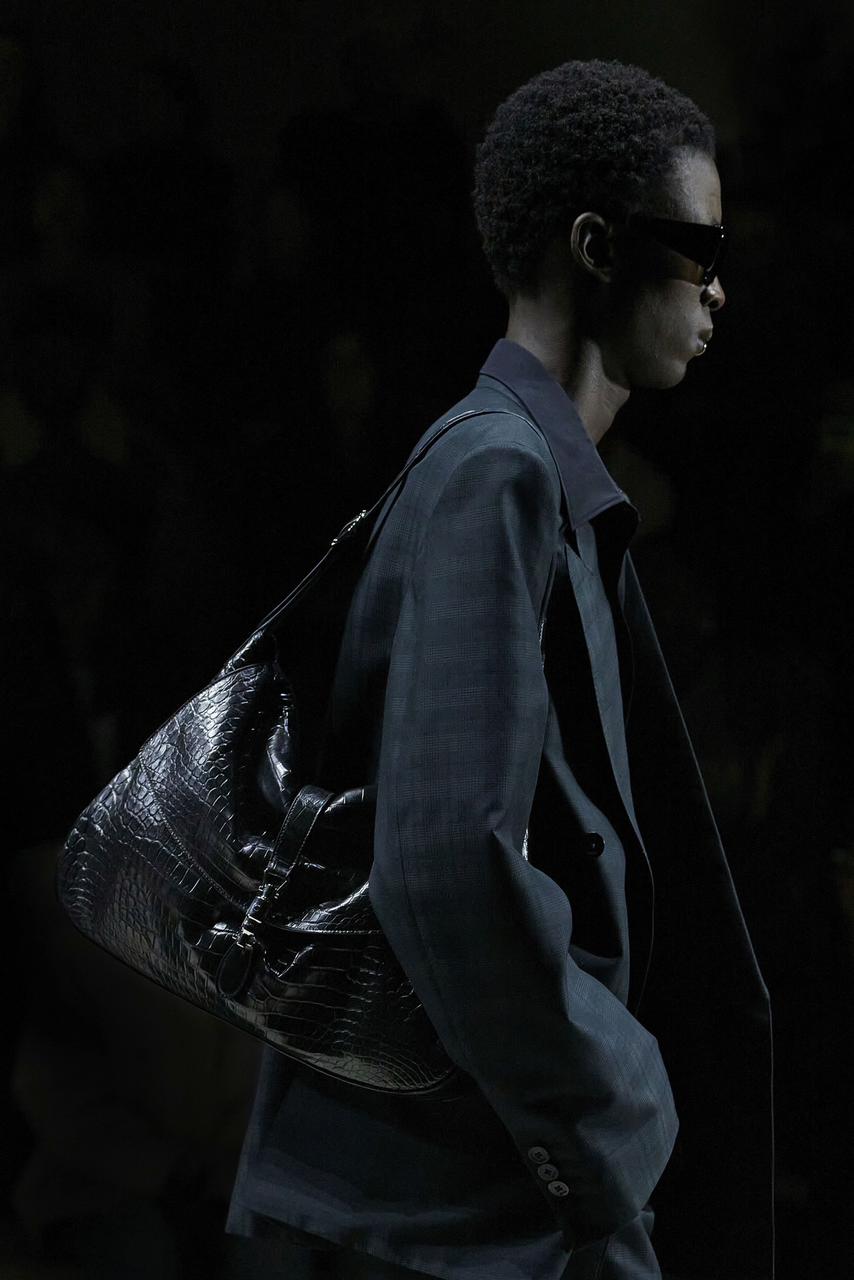
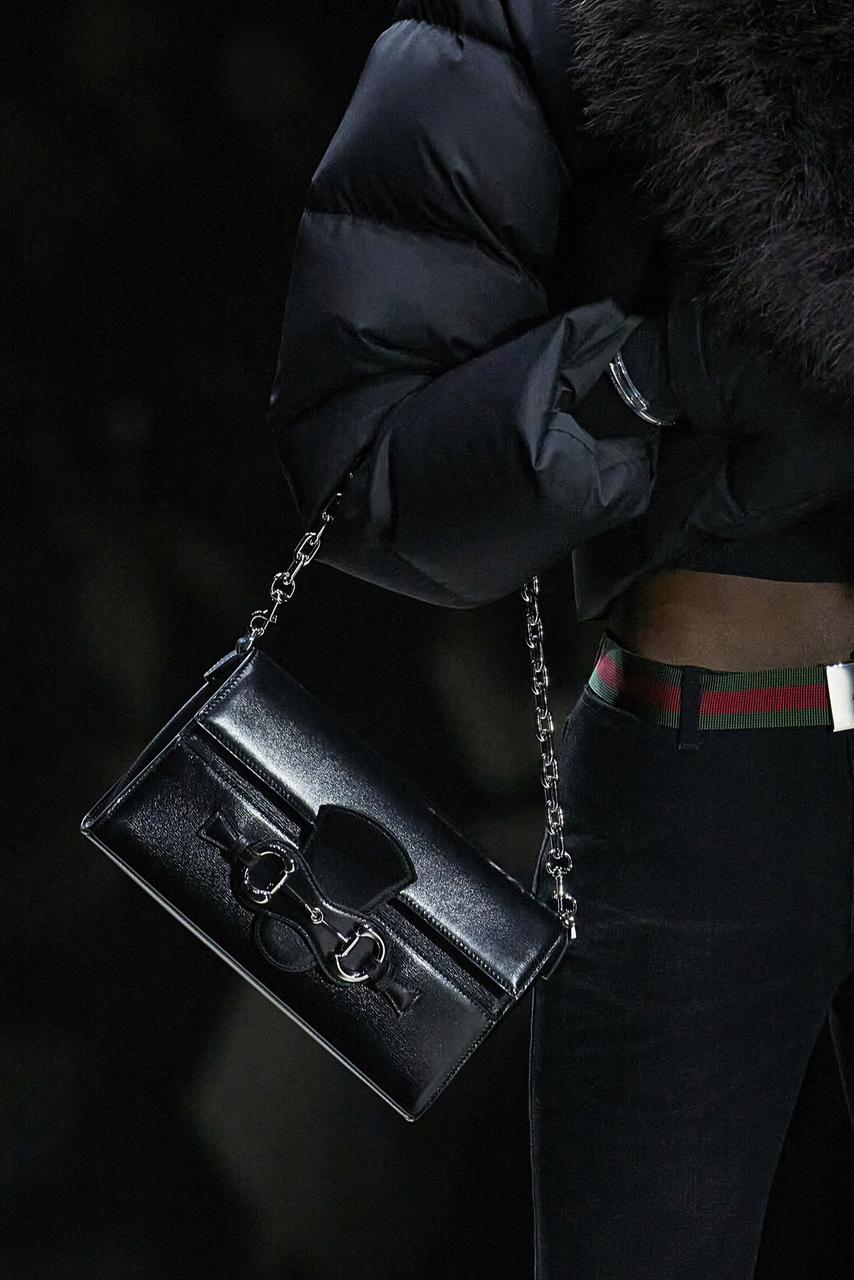
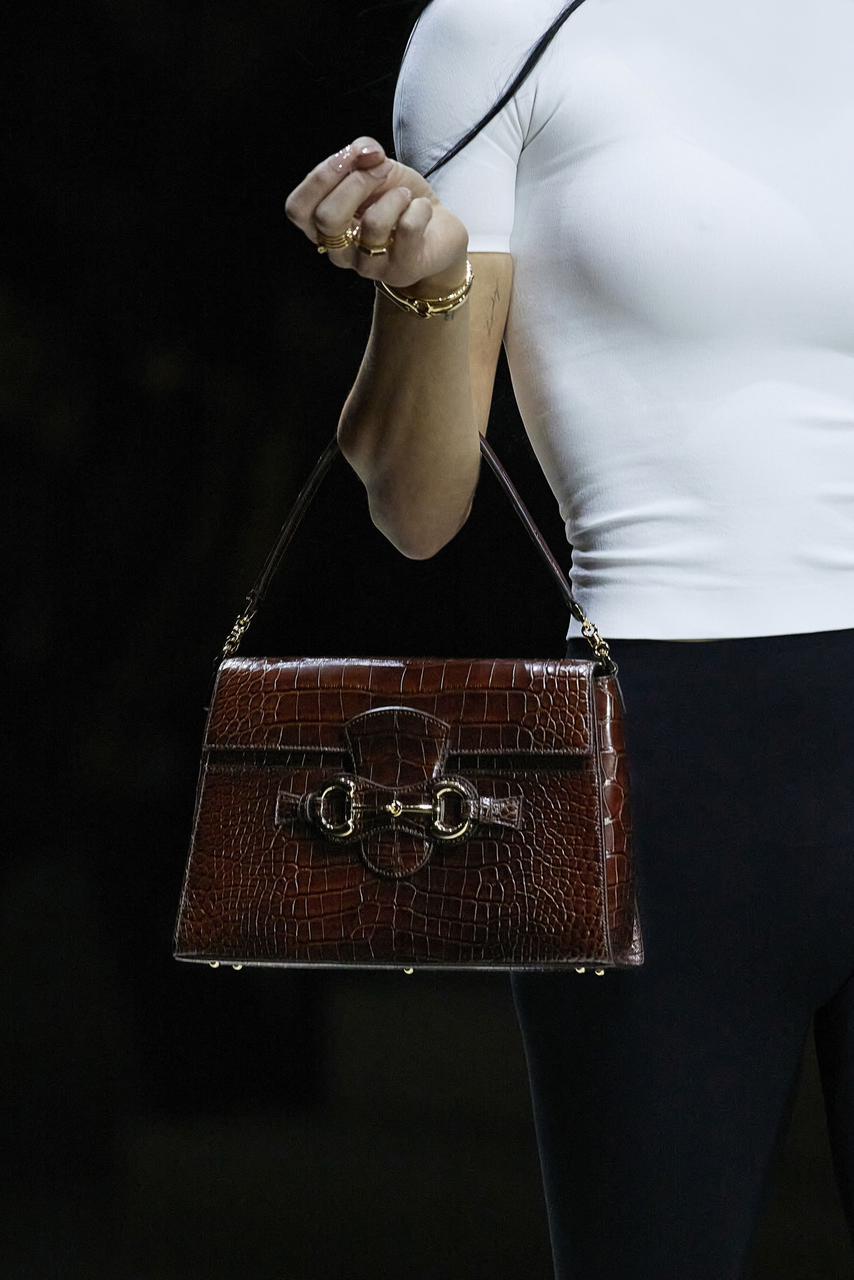
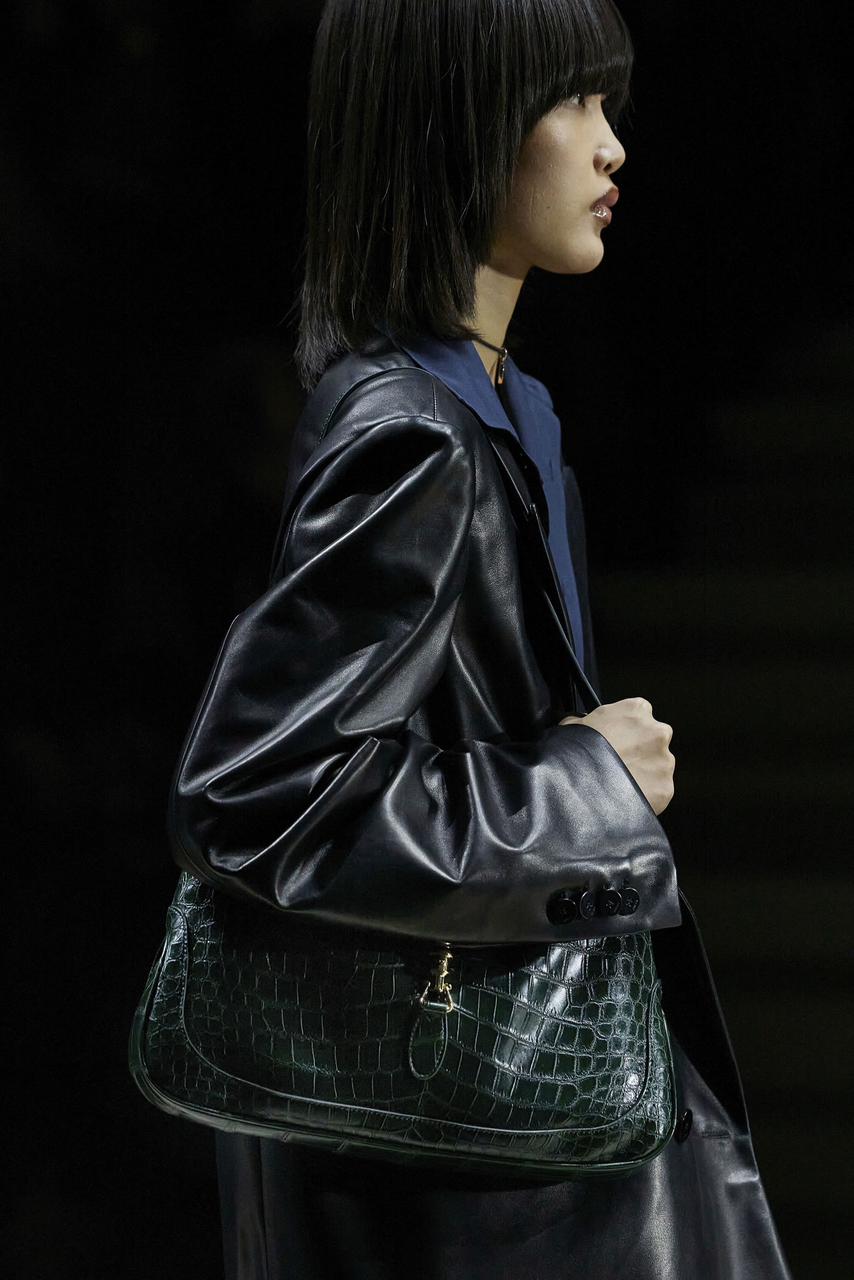
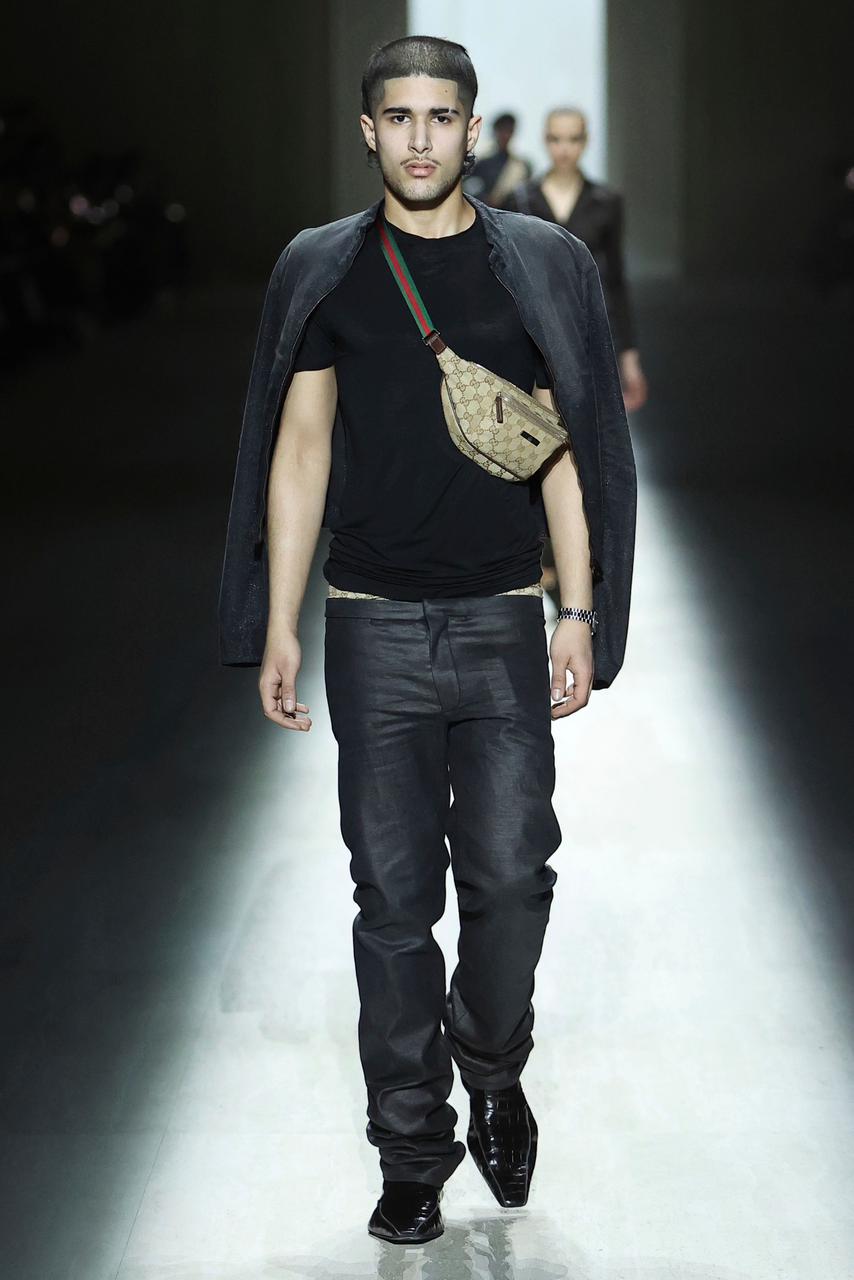
That same discipline carried into the accessories, which stayed close to house codes but felt deliberately tightened. Jackie bags appeared in firm leather versions carried tight under the arm, while structured top-handle styles with horsebit hardware echoed the sharpness of the tailoring. Larger leather totes were held low so they followed the line of the body instead of interrupting it. Logo belts, chain necklaces, and pointed pumps added flashes of familiarity, while the green-and-red stripe and double-G details kept the collection anchored in Gucci even as the attitude grew darker.
Photo: Courtesy of Gucci
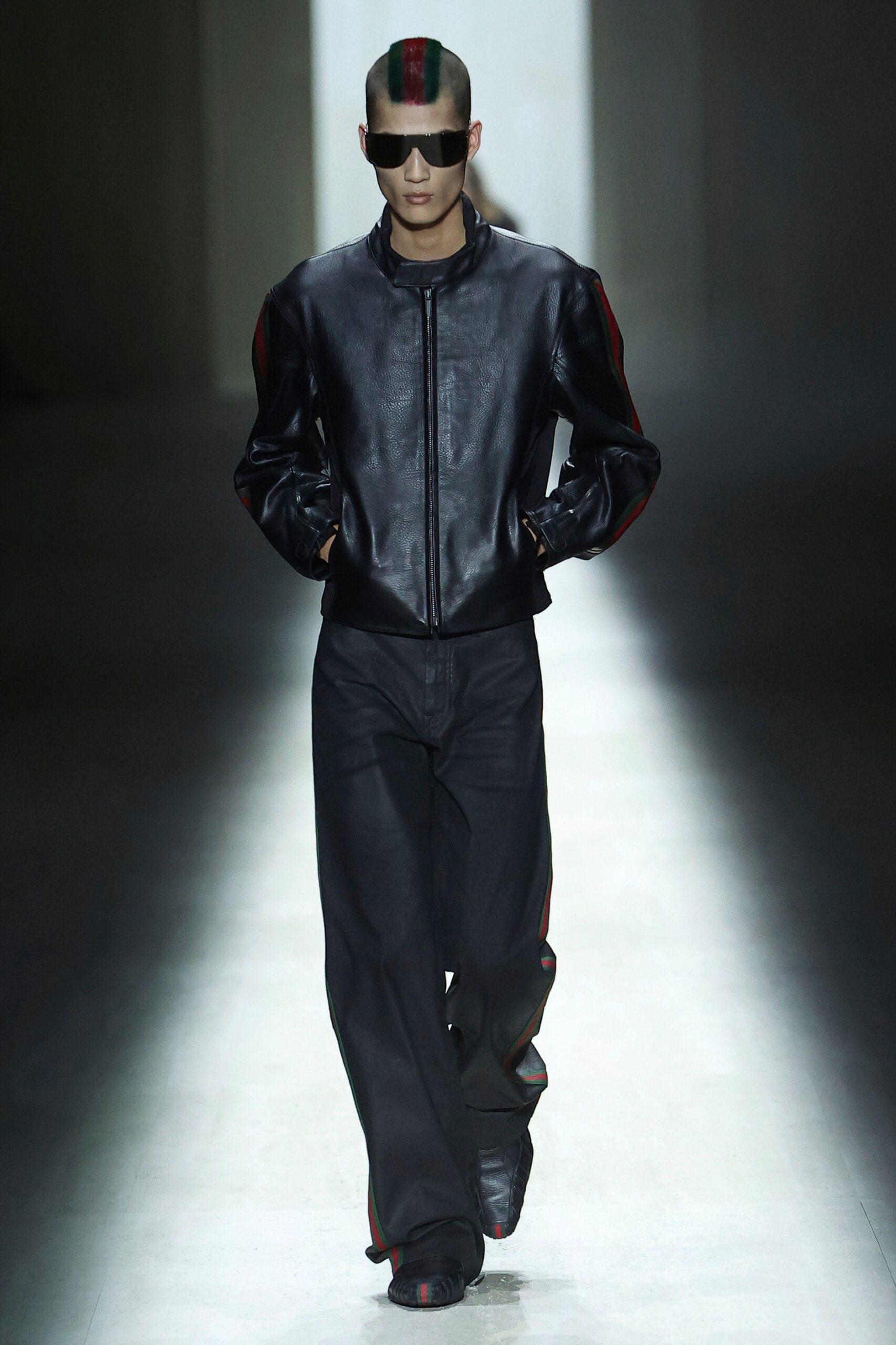
There were also moments where the severity loosened slightly. In one look, a model walked in a sharply cut tailored outfit, his hair sprayed in Gucci colors, a small but deliberate gesture that broke the strictness of the silhouette and brought back a hint of the brand’s irreverence. The detail felt less playful than pointed, a reminder that even in its most controlled moments, the collection was still built on recognizable Gucci codes. Another talking point came when Fakemink appeared on the runway in a fitted, body-conscious look that followed the same narrow line seen throughout the show. His casting quickly became one of the most discussed moments online, drawing criticism from some viewers, but it also reinforced Demna’s focus on attitude over convention, a Gucci defined as much by presence as by clothes.
Photo: Courtesy of Gucci
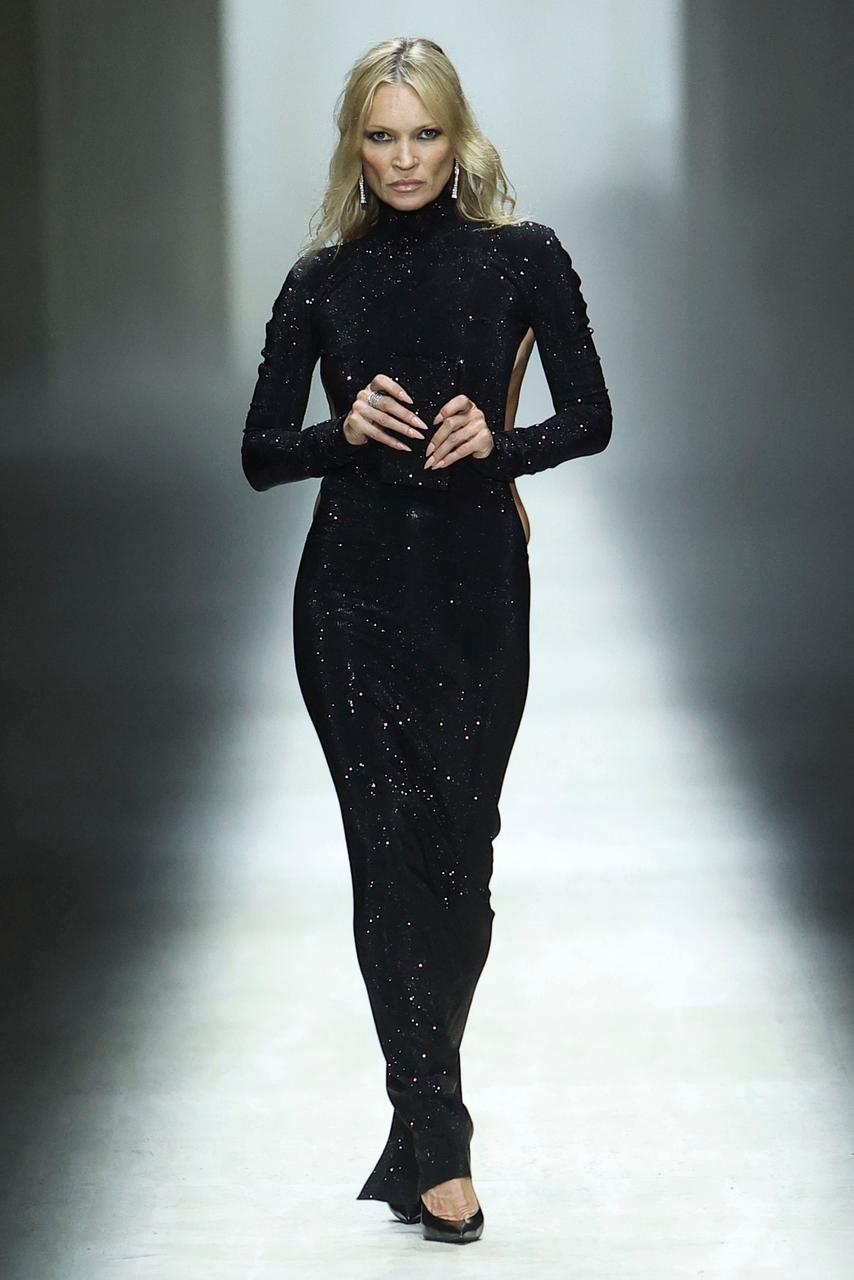
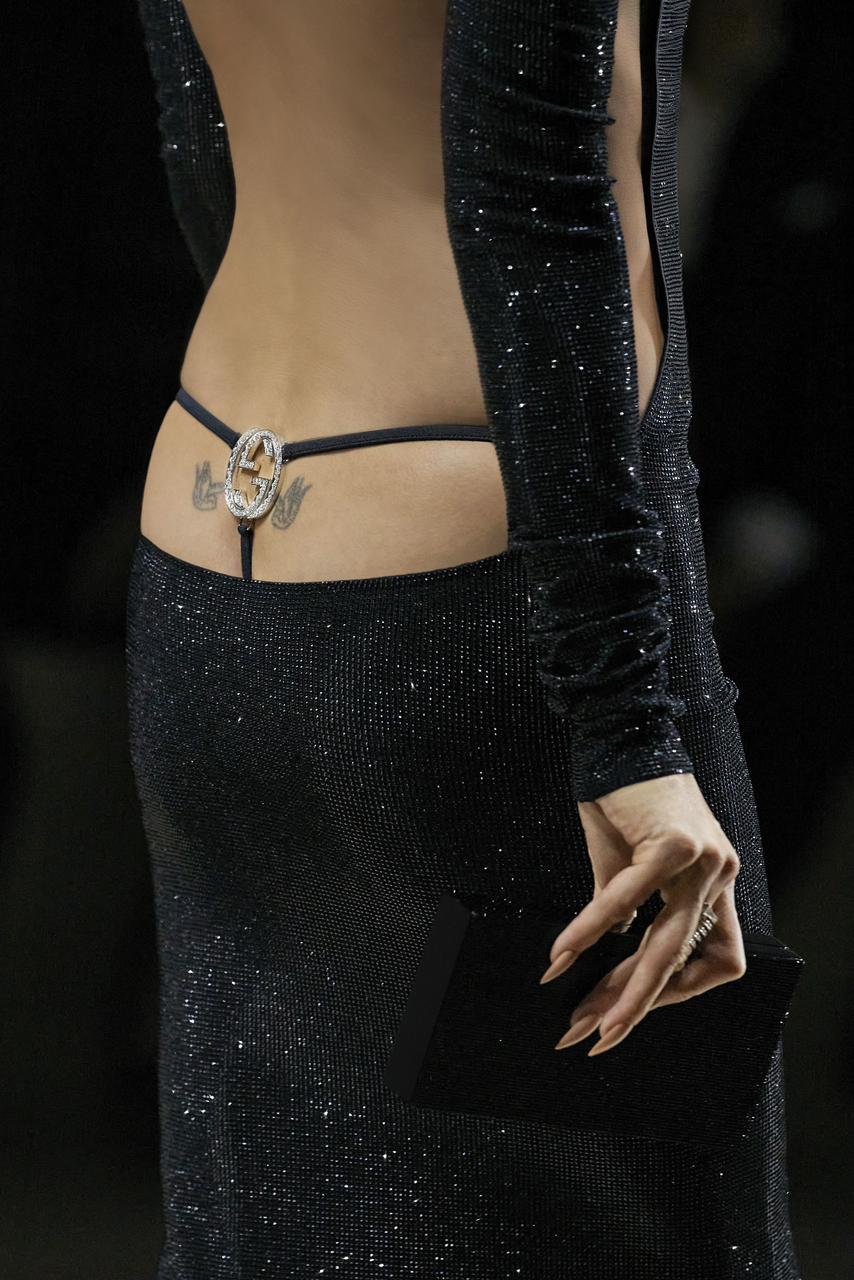
The closing look made the reference impossible to miss. Kate Moss appeared in a glittering column gown with a visible Gucci waistband at the back, a gesture that immediately recalled the house’s late-nineties image at its most provocative. Seeing Moss in that role felt less like nostalgia than like a reminder of the instinct that built Gucci in the first place, the mix of glamour, confidence, and danger that Demna seems determined to bring back.
What made Fall/Winter 2026 compelling was the way it held those instincts in check. The collection never fully surrendered to excess, but it never stayed entirely restrained either. Instead, it moved back and forth between discipline and desire, as if Demna wanted to show that before Gucci can become something new, it has to remember what it feels like to be Gucci.